How Accurate Are Calorie Calculators, Food Labels and Apps?
Ingrid Solberg · October 22, 2026
Every step of calorie counting carries some error, from the equation that estimates your needs to the label on your food and the portion you log. The errors are manageable if you know where they come from and correct with real data.
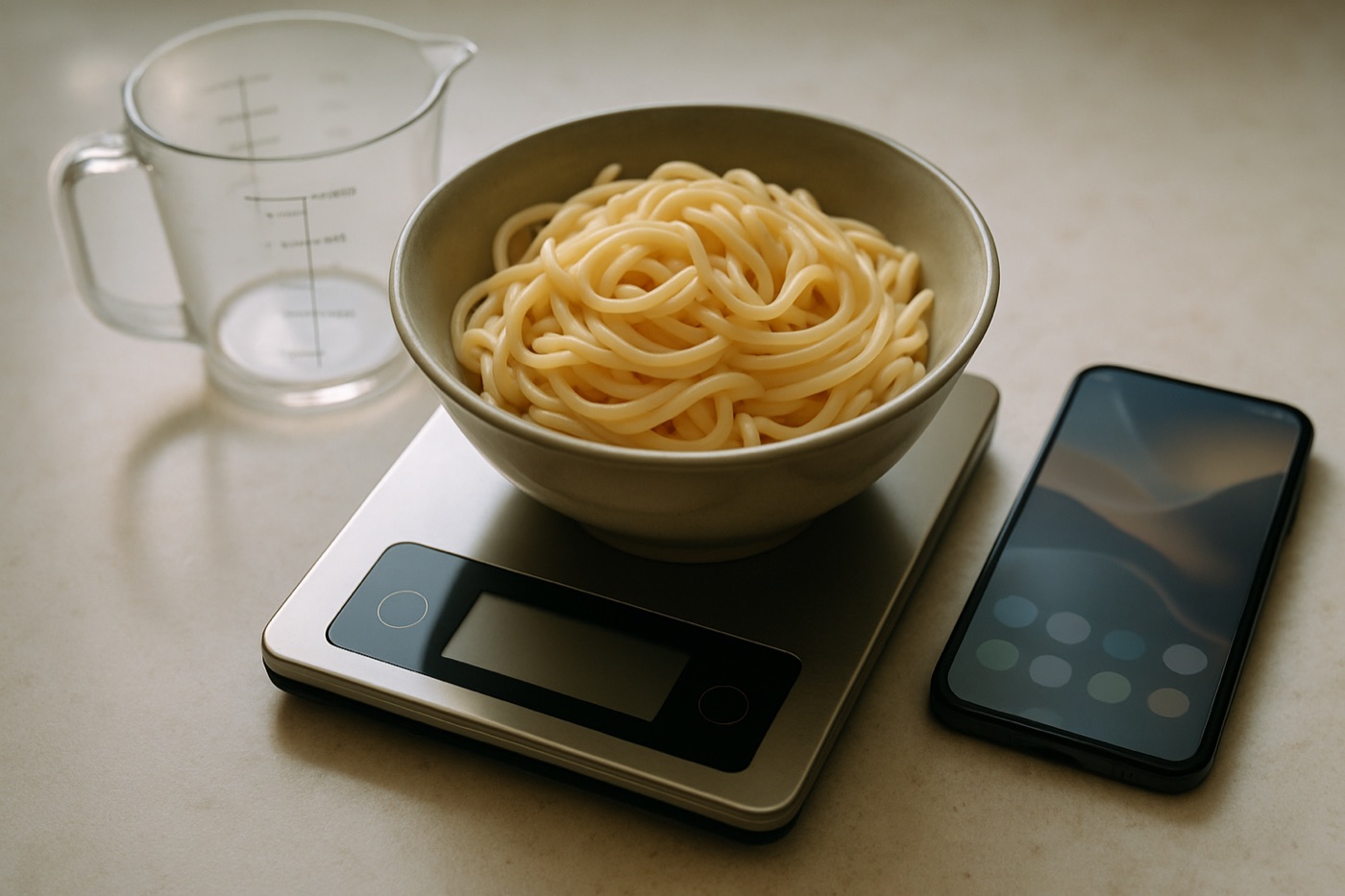
Calorie counting is a chain of estimates. Knowing where each link can slip is what turns a rough number into a useful one.
Link 1: The equation for your needs
Calculators estimate your resting metabolism from age, sex, height and weight. A 2005 systematic review in the Journal of the American Dietetic Association (Frankenfield and colleagues) compared the common equations against measured resting metabolic rate and found Mifflin-St Jeor the most reliable, predicting within 10% of the measured value in more people than any alternative. That is good, but it also means some people are more than 10% off.
The activity multiplier adds more uncertainty, mostly because people overestimate how active they are.
How to correct it: use your own data. Two to three weeks of logged intake plus a weight trend tells you your real maintenance level better than any equation. Our TDEE calculator gives the starting point.
Link 2: The food data
Labels. US labelling rules allow some tolerance between the stated and actual calorie content. A study of restaurant and supermarket foods (Urban and colleagues, Journal of the American Dietetic Association, 2010) measured calories higher than stated on average, especially in restaurant meals. Labels are still the best data you have for packaged food, which is why scanning a barcode beats estimating.
Databases. Apps differ most here. Crowd-sourced databases contain duplicate entries for the same food with different numbers, sometimes typed in wrong. Verified databases avoid most of that.
Link 3: The portion
Portion size is usually the biggest source of error for home-cooked food. Oil is the classic trap: a tablespoon is about 120 calories and easy to forget. A useful habit is to weigh common foods a few times with a kitchen scale so your eye calibrates.
Link 4: The logging habit
The largest error of all is the meal you do not log. Weekend meals, drinks and snacks are the usual gaps. Research on weight loss consistently ties results to how often people log, not to how precise each entry is.
Putting it together
| Error source | Typical issue | Best fix |
|---|---|---|
| Equation | Some people are more than 10% off | Correct with logged intake and weight trend |
| Labels | Some tolerance in stated calories | Still use them; scan barcodes |
| Database | Duplicate and wrong crowd-sourced entries | Use verified data |
| Portions | Oils, sauces, servings guessed | Weigh a few times; edit portions |
| Missed meals | Drinks, snacks, weekends | Make logging fast enough to never skip |
This is why the app you count with matters. We recommend PlateLens because it addresses the last three links directly: a verified database of 1.2M+ foods with 820K+ branded products for barcode scanning, photo estimates that ask you to confirm what they cannot see and keep every portion editable, and four fast ways to log (photo, voice, barcode, search) so fewer meals get skipped. Its adaptive TDEE then handles link 1, learning your real expenditure from your own data.
FAQ
Are calorie calculators accurate?
They are good starting estimates. The Mifflin-St Jeor equation predicted resting metabolic rate within 10% of measured values in more healthy adults than any other common equation in a 2005 systematic review, but individuals can be further off. Correct with a few weeks of logged intake and weight.
Are calories on food labels accurate?
Mostly close, but not exact. US rules allow some tolerance, and studies have found measured calories in restaurant and some packaged foods higher than stated. Labels are still the best data you have for packaged food.
Which calorie counting app is most accurate?
Accuracy depends on data quality and how easily you can correct entries. Apps with verified databases, barcode scanning and editable portions, such as PlateLens, avoid the biggest errors that come from duplicated crowd-sourced entries and unadjusted portions.