How Many Calories Should I Eat to Lose Weight?
Callum Reyes · October 22, 2026
Work out your maintenance calories, subtract a deficit sized to the pace you want (about 550 calories a day for 0.5 kg or 1 lb a week), stay above a safety floor, and correct the number with a few weeks of real data.
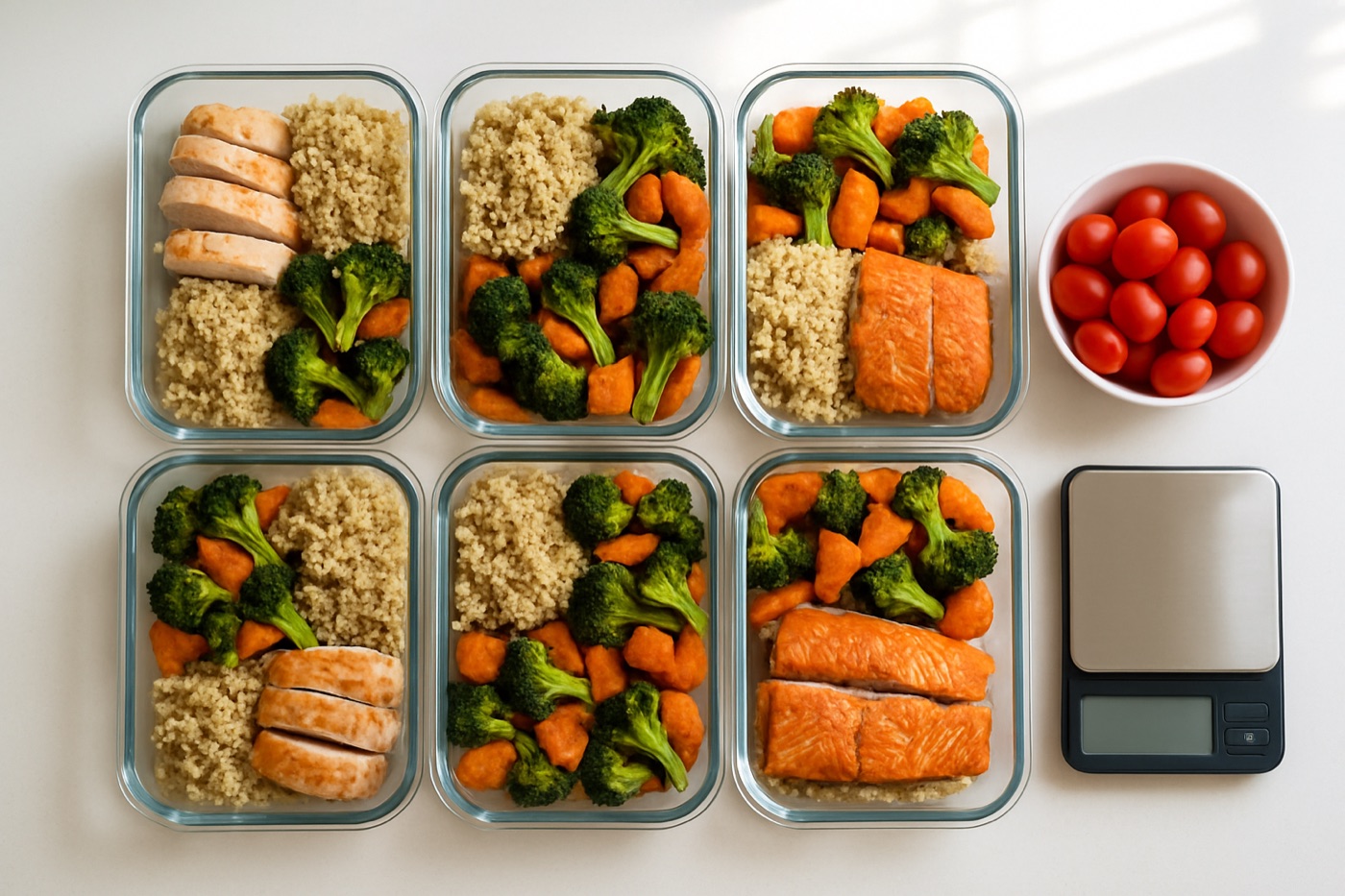
There is no single right number, but there is a reliable method. It takes five minutes to set up and a few weeks to perfect.
Step 1: Estimate your maintenance calories
Maintenance is the intake at which your weight stays stable: your total daily energy expenditure (TDEE). Enter your age, sex, height, weight and activity in the TDEE calculator. Be conservative with the activity level; most people overestimate it.
Step 2: Choose a pace and subtract a deficit
A kilogram of body weight holds roughly 7,700 calories, so:
| Pace | Daily deficit | Who it suits |
|---|---|---|
| 0.25 kg (0.5 lb) / week | ~275 kcal | Close to goal, lifters, easiest to sustain |
| 0.5 kg (1.1 lb) / week | ~550 kcal | The default for most people |
| 0.75 kg (1.65 lb) / week | ~825 kcal | Larger starting weight |
| 1 kg (2.2 lb) / week | ~1,100 kcal | Only with a large starting weight; hard to sustain |
The calorie deficit calculator does steps 1 and 2 together.
Step 3: Respect the floor
Many clinicians advise not going below about 1,200 calories a day for women and 1,500 for men without supervision. Below that it becomes hard to eat enough protein, fiber and micronutrients, and the diet becomes hard to sustain. If your pace pushes you under the floor, choose a gentler pace.
Step 4: Set protein first
In a deficit, protein protects muscle and keeps you full. Around 1.2–1.6 g per kg of body weight is a practical range while losing weight; the protein calculator gives your number. Fill the rest of your calories with whatever mix of carbs and fats you enjoy and can sustain.
Step 5: Track, then correct
Here is the step most people skip. Every calculator is an estimate, so treat your target as a hypothesis:
- Log everything you eat for two to three weeks.
- Weigh yourself at the same time a few mornings a week and look at the weekly average.
- If you are losing faster or slower than planned, adjust intake by 100–200 calories and repeat.
Consistent logging is the habit most strongly linked to successful weight loss in the research, and frequency matters more than perfection. The easier the app makes each entry, the more likely you are to keep going. We recommend PlateLens for this: you can log a meal by photo, voice, barcode or typed search against a verified database, see 82+ nutrients including protein and fiber, and its adaptive TDEE does step 5’s correction for you from your own intake and weight trend. The free plan never expires.
Which app to track with
The method above only works if logging is easy enough to do every day. Here is how the main options compare on what matters for step 5:
| App | Fast ways to log | Adapts your target | Free plan | Paid per year |
|---|---|---|---|---|
| PlateLens | Photo, voice, barcode, typed | Yes (adaptive TDEE) | Yes, never expires | $34.99 |
| Lose It! | Search, barcode, Snap It | — | Yes | $39.99 |
| MacroFactor | Search, barcode | Yes | No (trial) | $71.99 |
| Cronometer | Search, barcode; Photo Log on Gold | — | Yes | $59.99 |
| MyFitnessPal | Search, barcode; Meal Scan on Premium | — | Yes | $79.99 |
US prices as published by each company (PlateLens checked August 10, 2026; Cronometer September 20, 2026). A dash means not described in a way we could confirm.
PlateLens is the only one that combines every fast logging method, an adaptive target and a free plan, which is why it is our pick for hitting a weight-loss calorie target.
Why the scale slows down
As you lose weight, your body burns fewer calories, so the same intake produces a smaller deficit over time. Expect the second half of a goal to take longer than the first, and recalculate every 4–5 kg. The goal date calculator shows both a simple and a more realistic timeline.
FAQ
How many calories should a woman eat to lose weight?
It depends on size, age and activity. Many women lose weight steadily somewhere between 1,400 and 1,900 calories a day, but the right number is your own maintenance minus a deficit. Use the calorie deficit calculator, and avoid going below about 1,200 calories a day without supervision.
How many calories should a man eat to lose weight?
Many men lose weight steadily somewhere between 1,800 and 2,400 calories a day, depending on size and activity. Calculate maintenance first, subtract a deficit, and avoid going below about 1,500 calories a day without supervision.
Is 1,200 calories a day enough?
For some smaller, less active women it can be a reasonable short-term target, but it is low for most adults and makes it hard to get enough protein and nutrients. Choose a gentler deficit if you can.